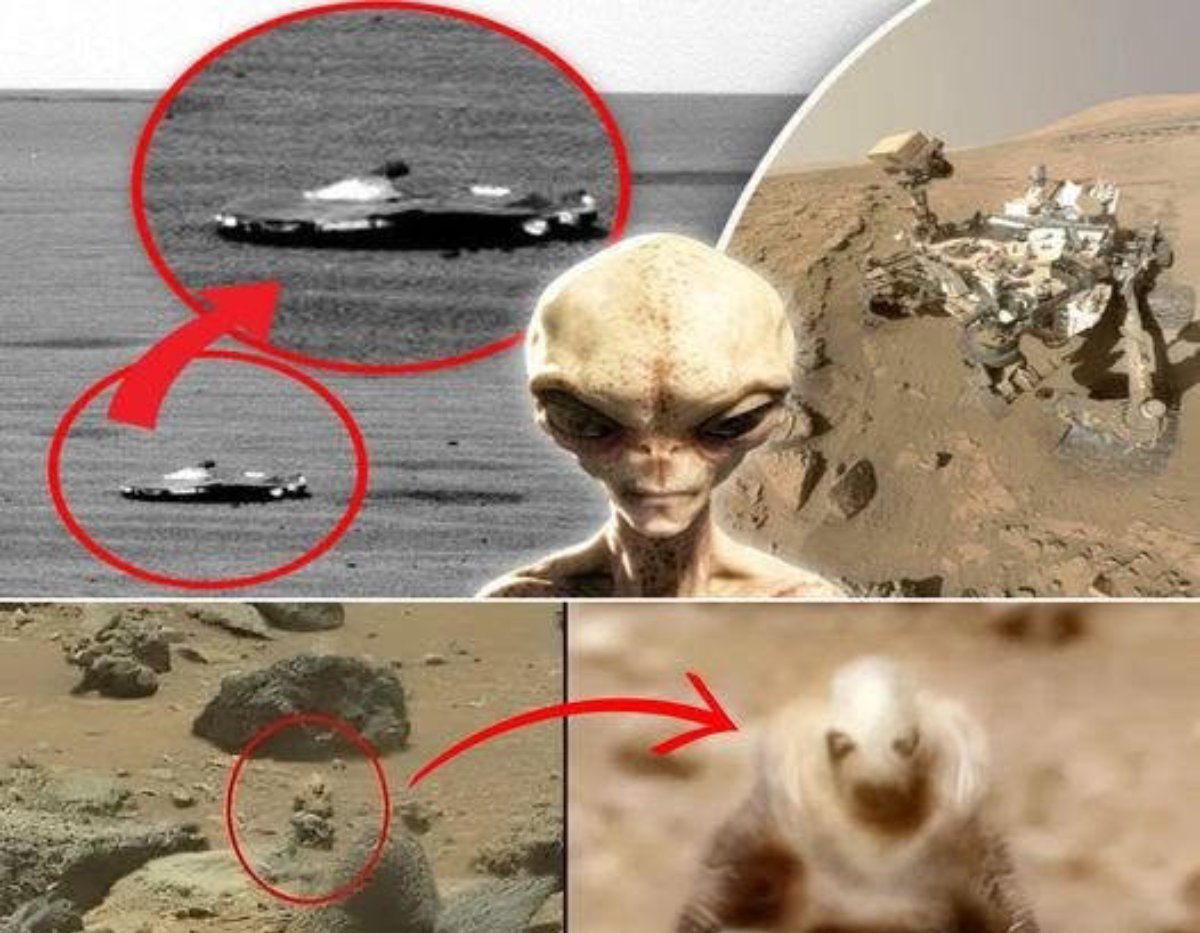
For centuries, humanity has gazed into the night sky, wondering whether we are truly alone. While telescopes and space probes have revealed breathtaking landscapes across our Solar System, they have also captured images that continue to fuel mystery and speculation.
Now, a growing collection of unusual formations discovered on the Moon, Mars, and even Saturn’s icy moons has sparked a new wave of debate. Some independent researchers believe these structures resemble enormous artificial constructions—possibly the remains of civilizations that vanished long before humanity existed.
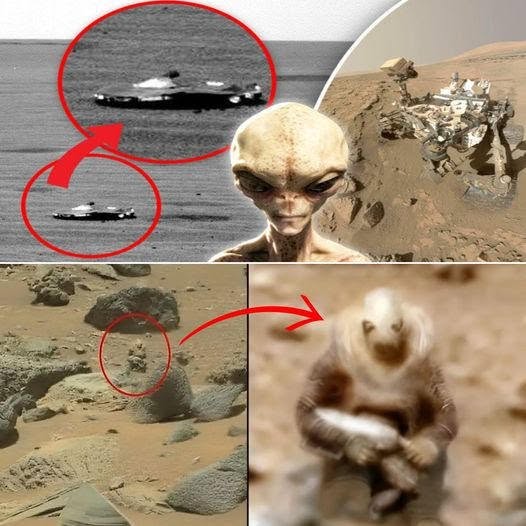
Could ancient architects have once shaped worlds beyond Earth, or are our eyes simply finding patterns where none exist?
Strange Shapes on the Moon
The Moon has always been a source of mystery. Since the Apollo era, countless photographs have circulated online showing geometric shadows, towering formations, and rectangular patterns hidden among craters.
One recently enhanced satellite image appears to reveal what looks like a massive wall stretching for several kilometers across the lunar surface. Nearby, another formation resembles a giant pyramid casting an unusually symmetrical shadow during lunar sunrise.
Scientists generally explain these images as natural rock formations combined with lighting effects and image compression artifacts. However, enthusiasts argue that the regular angles and apparent alignment of multiple structures seem difficult to dismiss.
If these formations are natural, they are among the most unusual geological features ever observed.
Mars and the Return of the “Ancient City”
Mars has produced similar controversies for decades.
The famous “Face on Mars,” photographed by NASA’s Viking mission in 1976, became one of the greatest extraterrestrial mysteries in history. Although higher-resolution images later showed it to be an ordinary hill shaped by erosion, speculation never truly disappeared.
Instead, new orbital imagery has introduced fresh anomalies.
Some satellite photographs appear to show grid-like arrangements, hexagonal plateaus, and perfectly linear ridges extending across the Martian landscape. Others point toward enormous circular formations that resemble ancient foundations buried beneath dust and rock.
Several independent analysts suggest these could represent remnants of forgotten megastructures destroyed by catastrophic events millions of years ago.
Mainstream planetary scientists maintain that volcanic activity, wind erosion, and tectonic stress can naturally create surprisingly geometric patterns without requiring intelligent design.
Saturn’s Mysterious Hexagon
Unlike the Moon or Mars, Saturn presents an anomaly that scientists openly acknowledge: its enormous north polar hexagon.
Discovered during the Voyager missions and later studied by the Cassini spacecraft, this gigantic six-sided atmospheric pattern spans roughly 30,000 kilometers across—large enough to fit several Earths inside.
Although researchers believe it is a stable atmospheric wave created by fluid dynamics, some speculate whether the astonishing symmetry hints at something far more unusual.
Its perfectly defined edges and remarkable persistence have inspired countless theories involving advanced civilizations, unknown physics, or artificial planetary engineering.
No evidence supports these extraordinary claims, but the hexagon remains one of the Solar System’s most visually striking phenomena.
Could Ancient Civilizations Have Existed Before Humanity?
Some alternative historians propose that advanced civilizations may have flourished billions of years ago, long before Earth became habitable for intelligent life.
According to these speculative ideas, massive impacts, planetary climate changes, or stellar events could have erased nearly every trace of their existence, leaving only scattered ruins visible from orbit.
Others suggest that highly advanced visitors from distant star systems may have constructed research stations or mining facilities throughout the Solar System before mysteriously disappearing.
At present, these ideas remain entirely hypothetical and are not supported by scientific evidence.
What Do Scientists Say?
Most astronomers caution against drawing extraordinary conclusions from photographs alone.
Human brains naturally recognize familiar shapes—a psychological phenomenon known as pareidolia. Clouds become faces, mountains resemble castles, and random rocks can appear astonishingly artificial when viewed from certain angles.
High-resolution imaging frequently resolves many apparent anomalies into ordinary geological formations.
Even so, researchers acknowledge that planetary exploration is still in its infancy, and countless regions of our neighboring worlds remain only partially mapped.
Future missions may reveal surprises that challenge current understanding.
A Mystery That Continues
Whether these mysterious formations are products of nature or simply optical illusions, they continue to inspire imagination across the globe.
Every new spacecraft that reaches another world provides sharper images—and sometimes even stranger questions.
For now, there is no verified scientific evidence that artificial structures exist on the Moon, Mars, Saturn, or elsewhere in our Solar System. Yet the possibility of undiscovered secrets beyond Earth remains one of humanity’s greatest sources of curiosity.
Perhaps future explorers will finally settle the debate. Until then, the strange shapes scattered across distant worlds will continue to blur the line between science and mystery, inviting us to wonder what may still be waiting to be discovered among the stars.