For thousands of years, humanity has looked up at the Moon and wondered what mysteries it might conceal. While one hemisphere has always faced Earth, the opposite side remained completely unseen until the dawn of the Space Age. Even today, the Moon’s far side continues to inspire speculation, scientific curiosity, and countless theories about what might be hidden beyond our view.
With renewed interest surrounding the Artemis II mission, discussions about the Moon’s mysterious hidden hemisphere have once again spread across the internet. Images from orbiting spacecraft and decades of unexplored terrain have fueled imaginative claims ranging from ancient ruins to secret structures left behind by unknown civilizations.
But how much of this is based on evidence, and how much belongs to the world of speculation?
The Side We Never See
Many people mistakenly believe the far side of the Moon is permanently dark. In reality, it receives just as much sunlight as the side facing Earth. It is simply locked in synchronous rotation, meaning the same face always points toward our planet while the opposite hemisphere remains hidden from direct view.
Because humans spent centuries without seeing this region, myths naturally emerged. Once spacecraft finally photographed the far side, scientists discovered a landscape dramatically different from the familiar face visible from Earth—covered with enormous craters and rugged mountains rather than large dark plains.
Strange Images and Unusual Formations
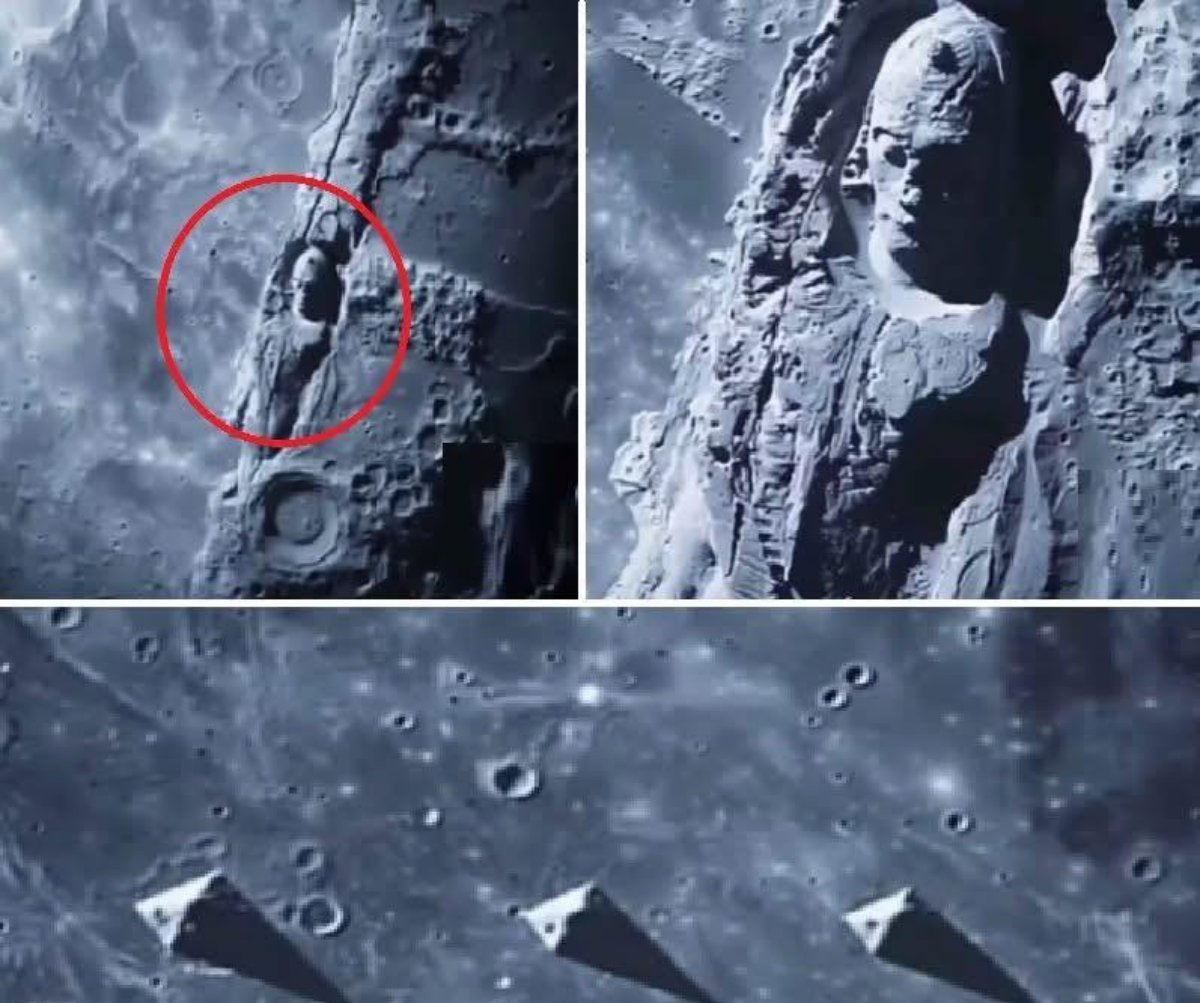
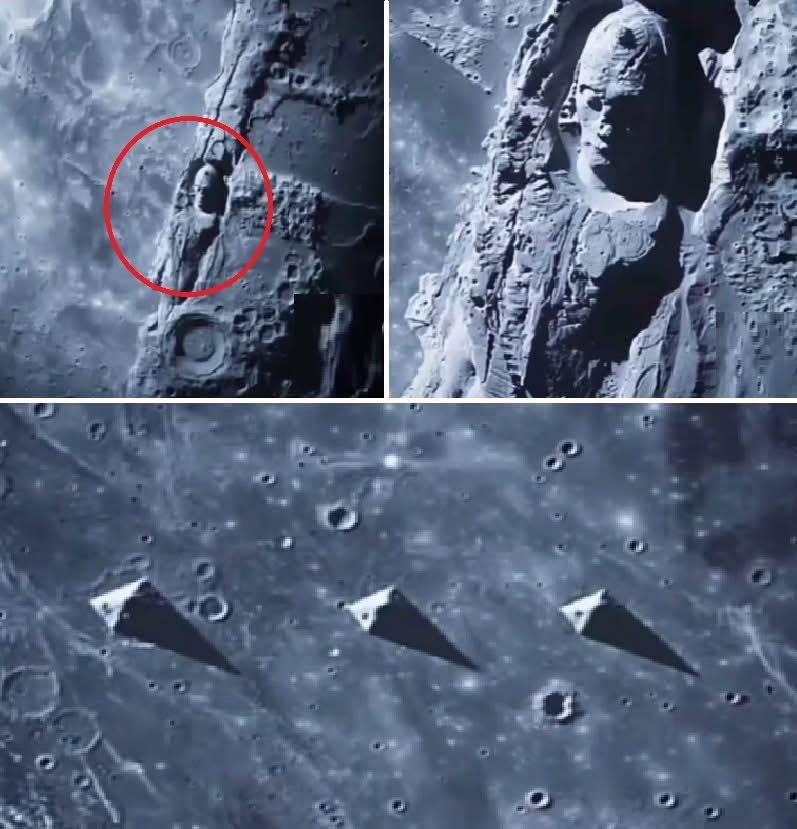
Over the years, satellite photographs have circulated online showing unusual geometric shadows, oddly shaped hills, and formations that some viewers believe resemble towers, walls, or pyramids.
Supporters of alternative theories argue that these features could represent ancient artificial structures buried beneath billions of years of dust and meteor impacts. Others speculate that advanced civilizations may have once used the Moon as an observation post or even as a massive spacecraft.
However, planetary geologists explain that unusual lighting angles and natural geological processes can create remarkably symmetrical formations that appear artificial from orbit.
Why Artemis II Has Renewed Interest
As humanity prepares for a new era of lunar exploration, public fascination with the Moon has returned. Artemis II represents another major step toward sending astronauts deeper into lunar space and eventually establishing a long-term human presence around the Moon.
Although the mission is focused on scientific exploration and future human spaceflight, renewed media attention has revived decades-old discussions about unexplained lunar photographs and mysterious anomalies captured by previous missions.
Every new image released from lunar orbit inspires fresh debate among both scientists and enthusiasts.
Could Ancient Secrets Still Be Waiting?
Some researchers outside mainstream science believe that if intelligent civilizations ever existed elsewhere in the Solar System millions of years ago, the Moon’s stable environment could preserve traces of their technology far better than Earth, where erosion, plate tectonics, and weather constantly reshape the surface.
These ideas remain entirely hypothetical, and no verified archaeological evidence has ever been discovered on the Moon.
Still, the possibility continues to capture imaginations around the world.
The Truth Behind the Mystery
Modern lunar missions have mapped the Moon in extraordinary detail, revealing a world shaped by volcanic activity and billions of years of asteroid impacts. Most scientists conclude that the unusual formations seen in photographs are natural geological features rather than artificial constructions.
Yet countless regions remain unexplored at ground level, leaving room for future discoveries that may deepen our understanding of the Moon’s history.
Whether the hidden hemisphere contains nothing more than ancient rocks or surprises yet to be uncovered, one fact remains certain: the Moon still holds countless scientific mysteries waiting to be explored.
As humanity prepares to return, the far side of our closest celestial neighbor continues to remind us that even familiar worlds can still inspire wonder.