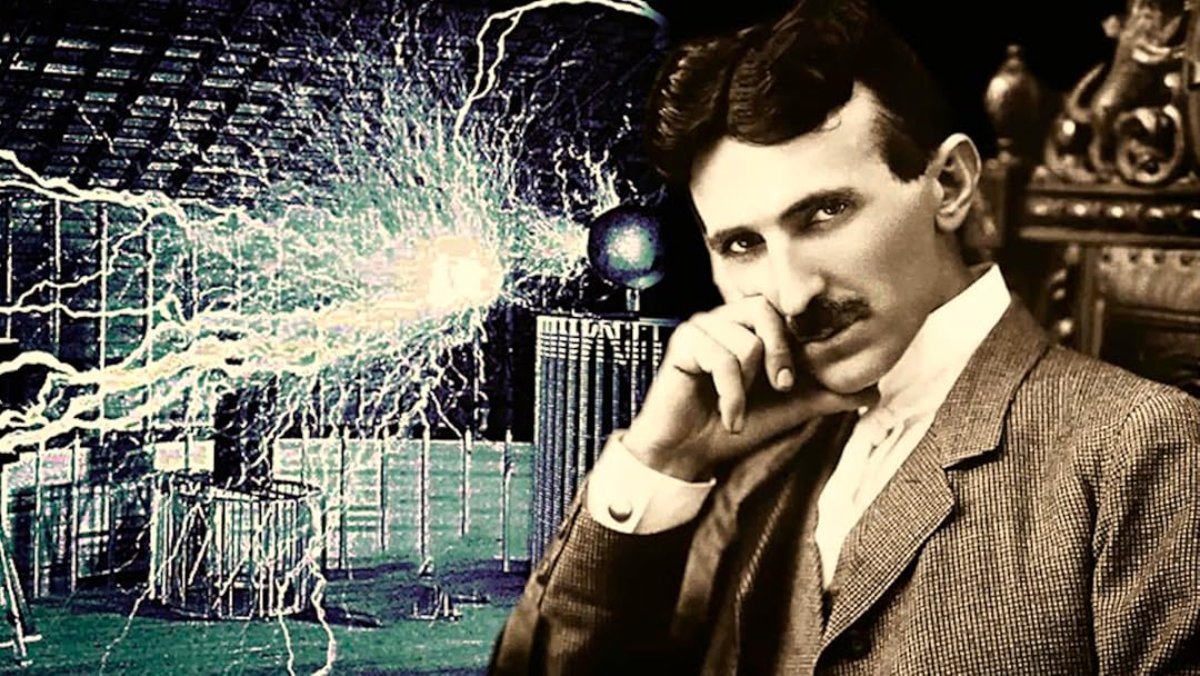
In 1899, Nikola Tesla was alone in his Colorado Springs laboratory, surrounded by coils and crackling electricity, when he noticed something he could not explain. The signals reaching his equipment were rhythmic, deliberate-seeming — too organised, he felt, to be random noise from the atmosphere. He began counting the pulses. He documented them carefully. And then he made a claim that would follow him for the rest of his life: that the signals might be coming from somewhere, or something, beyond Earth.
Most of his contemporaries dismissed it. Some never forgave him for saying it.
More than a century later, a research team testing Google’s Willow quantum chip reportedly observed something that brought Tesla’s old notes back into circulation.
What the Willow Chip Produced
The Willow chip operates at temperatures close to absolute zero, which is necessary to preserve the fragile quantum states it depends on. During a testing session, researchers introduced controlled signals into the system. What came back was unexpected — not random interference, but a structured, repeating rhythm. More unusually, the output appeared stronger than the input.
Engineers immediately began working to rule out measurement errors and internal feedback loops. The signal did not disappear on closer inspection. It held its pattern.
When some researchers noticed that the rhythm bore a resemblance to Tesla’s written descriptions from Colorado Springs, the story moved beyond the lab.
The Problem with Drawing Conclusions
Quantum systems are genuinely strange. Interference effects, entanglement, and feedback within the system can all produce outputs that look patterned when they are not carrying any external meaning. Scientists working in this field are careful for exactly this reason — unusual behaviour inside a quantum processor does not automatically point outward.
The honest position, and the one most researchers hold, is that the observation is interesting and unexplained, but nowhere near confirmed. Replication by independent laboratories is the necessary next step. Until that happens, the pattern remains precisely what it appears to be: a question without an answer.
Why Tesla’s Notes Still Matter
What keeps this story alive is not speculation — it is the quality of Tesla’s original documentation. His records from Colorado Springs were precise and consistent. He noted intervals, intensities, and sequences. Whether he was detecting atmospheric phenomena he misunderstood, or something else entirely, he was clearly observing something real and recording it with discipline.
That rigour is why modern researchers occasionally return to his work. It is not nostalgia. It is that the documentation holds up.
The Deeper Question
Quantum computers process information in ways that classical machines fundamentally cannot. This has led some researchers to ask whether such systems might be sensitive to patterns that conventional technology simply cannot detect. The idea remains theoretical, and no confirmed example exists. But the question is not considered unreasonable to ask.
What the Willow observation does, regardless of how it is eventually explained, is highlight how much about quantum behaviour remains genuinely open. The field is young. Unexpected results are part of the process.
Whether the signal turns out to be internal feedback, a measurement artefact, or something that requires an entirely new explanation, it has done what Tesla’s work did in 1899 — it has made people look more carefully, and ask questions they had not thought to ask before.
The Willow chip observation has not been independently verified at the time of writing. Scientific caution is warranted until replication confirms the findings.