
A wave of excitement has swept across the internet after reports emerged claiming that researchers have uncovered astonishing details hidden within the body structures of alleged extraterrestrial beings. The claims, if ever confirmed, could reshape humanity’s understanding of life beyond Earth—but for now, they remain the subject of intense debate and speculation.
According to online sources and independent investigators, the mysterious bodies display anatomical features unlike those of any known terrestrial species. High-resolution imaging reportedly revealed lightweight skeletal systems, unusually elongated skulls, and internal organs arranged in patterns never before documented in human biology.
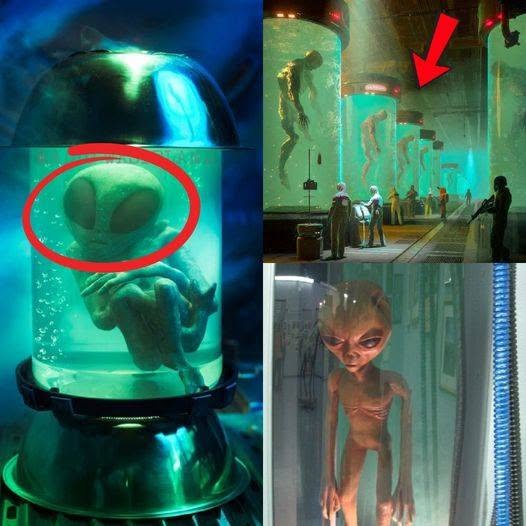
Some researchers involved in the examinations claim the skeletal composition appears exceptionally strong despite being significantly lighter than human bone. Others describe intricate networks of tissue that seem designed for environments with lower gravity, leading to speculation that the beings may have evolved on another world.
Even more controversial are reports of metallic-looking microscopic structures embedded within soft tissue. Advocates of the extraterrestrial hypothesis argue these formations could represent biological technology or natural evolutionary adaptations unknown on Earth. However, no peer-reviewed scientific evidence has confirmed these interpretations.
DNA analysis has become one of the most discussed aspects of the alleged discovery. Supporters claim fragments of genetic material recovered from the remains do not perfectly match any known Earth organism, fueling theories that the bodies may represent a previously unknown form of life. Skeptics counter that degraded samples, contamination, and incomplete sequencing can easily produce unusual results that should not be interpreted as alien origins.
The debate has spread rapidly across social media platforms, where millions of users are analyzing photographs and laboratory images frame by frame. Videos discussing the alleged findings have accumulated enormous view counts, with audiences divided between believers and critics.
Scientists from mainstream institutions urge caution. Extraordinary claims, they argue, require extraordinary evidence, including transparent testing methods, independent replication, and publication in respected scientific journals. Until such standards are met, they warn that sensational conclusions should be treated carefully.
Historians and anthropologists have also entered the discussion, noting that unusual skeletal remains have frequently been misidentified throughout history before later being explained as human remains with congenital conditions, ancient burial practices, or artistic modifications.
Despite skepticism, the story has reignited global curiosity about the possibility of intelligent life elsewhere in the universe. From government UFO investigations to recent discoveries of potentially habitable exoplanets, interest in extraterrestrial life has never been higher.
Whether these mysterious bodies represent a groundbreaking scientific discovery or another misunderstood archaeological curiosity remains uncertain. Further independent analysis will be essential before any extraordinary conclusions can be accepted.
Disclaimer: This article is written in a speculative “breaking news” style inspired by online discussions. There is currently no verified scientific consensus or publicly confirmed evidence that extraterrestrial bodies with these characteristics have been discovered. Readers should distinguish between speculation and established scientific findings.