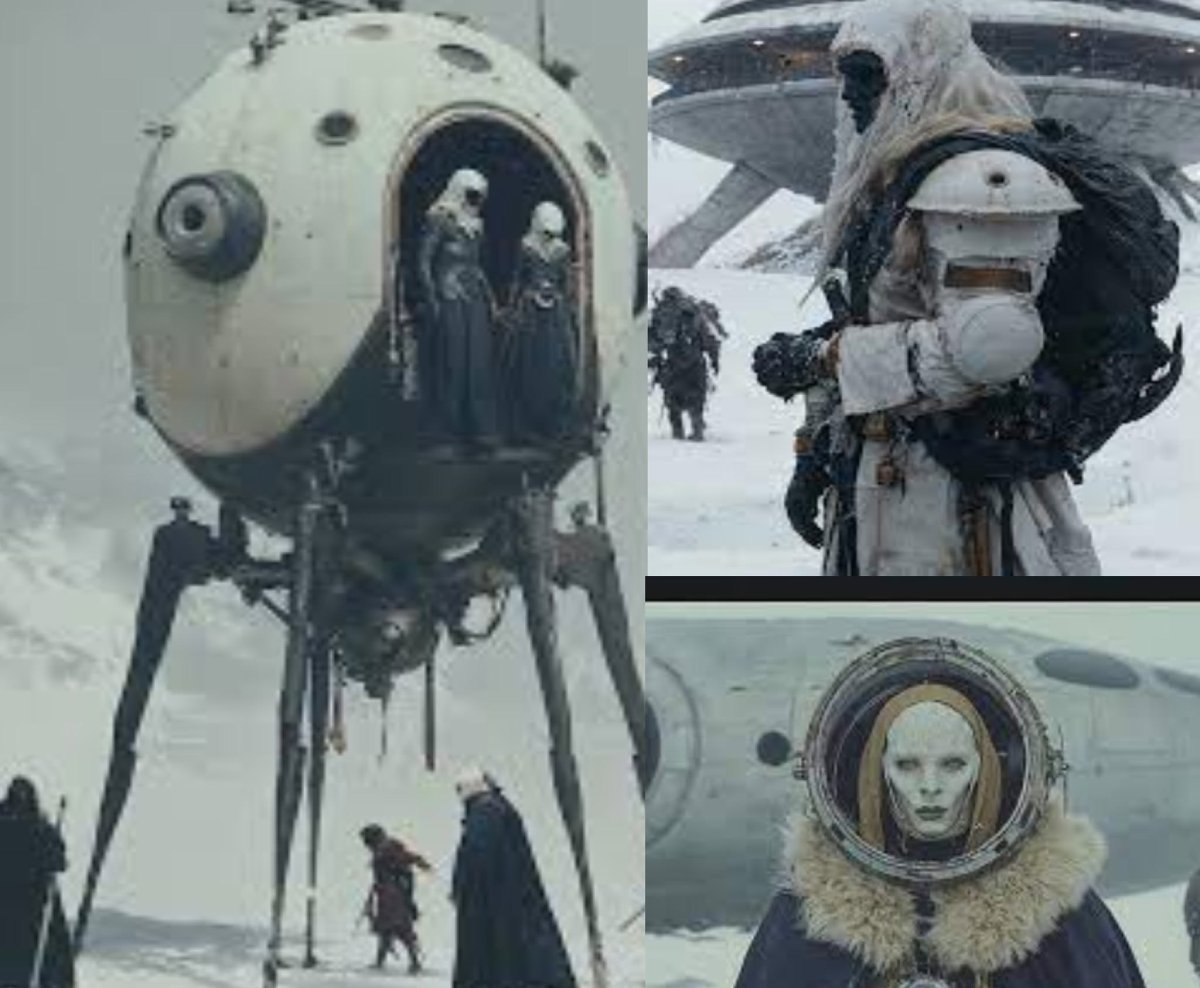
The Frozen Continent That Guards Some of Earth’s Greatest Secrets
At the southernmost edge of our planet lies a land unlike any other—a vast wilderness of ice, silence, and mystery. Antarctica, covering nearly 14 million square kilometers, is the coldest, driest, and windiest continent on Earth. Almost 98% of its surface is buried beneath ice that, in some places, is more than four kilometers thick.
Although scientists have explored Antarctica for over a century, much of what lies beneath its frozen surface remains unknown. This has inspired countless theories ranging from hidden ecosystems and ancient civilizations to secret military bases and extraterrestrial activity.
While many of these ideas are unproven speculation, Antarctica continues to be one of the least understood places on Earth.
A World Hidden Beneath Miles of Ice
Beneath Antarctica’s enormous ice sheet lies an entirely different landscape.
Using radar and satellite imaging, scientists have discovered buried mountain ranges, valleys, rivers, and hundreds of hidden lakes trapped beneath the ice for millions of years.
One of the most famous is Lake Vostok, a massive freshwater lake buried beneath nearly four kilometers of ice. Because it has been isolated for possibly 15 million years, researchers believe it could contain unique microorganisms that evolved independently from the rest of Earth’s life.
Its existence demonstrates that Antarctica still holds environments humans have never directly explored.
The Mysterious Blood Falls
Among Antarctica’s strangest natural phenomena is Blood Falls, where deep red water slowly flows from the Taylor Glacier.
Early explorers believed algae caused the color, but modern research found that iron-rich salty water emerging from beneath the glacier oxidizes upon contact with oxygen, producing its blood-like appearance.
The hidden reservoir feeding Blood Falls may have been sealed off from the atmosphere for over a million years, containing microbial life that survives in complete darkness without sunlight.
The Gamburtsev Mountains: A Buried Mountain Range
One of Antarctica’s greatest geological mysteries is the Gamburtsev Subglacial Mountains.
This enormous mountain range rivals the European Alps in size yet remains completely buried beneath kilometers of ice. Scientists still debate how such mountains formed in the middle of an ancient continental plate.
Because nobody has ever directly seen them, radar imaging provides the only glimpse into this hidden world.
Strange Signals Beneath the Ice
Several scientific experiments studying cosmic particles in Antarctica have detected unusual radio signals emerging from below the ice.
These signals generated widespread media attention and speculation that unknown particles—or something even stranger—might exist beneath the continent.
However, researchers continue investigating possible explanations involving neutrinos, atmospheric effects, or experimental uncertainties. No evidence currently supports extraordinary claims about hidden civilizations or underground technology.
Nazi Bases and Secret Conspiracies
Few places have generated more conspiracy theories than Antarctica.
Some stories claim Nazi Germany built hidden underground bases there during World War II, storing advanced technology or escaping after the war.
Others suggest secret entrances to enormous underground cities exist beneath the ice.
Despite decades of rumors, historians have found no credible evidence supporting these extraordinary claims. Most originated from post-war myths, fictional accounts, and internet speculation.
Could Ancient Civilizations Have Existed There?
Millions of years ago Antarctica was far warmer than today.
Fossils show forests, dinosaurs, and diverse ecosystems once flourished across the continent before tectonic shifts and climate changes transformed it into a frozen desert.
This ancient history has led some to wonder whether unknown intelligent civilizations could have once lived there.
To date, no archaeological evidence has ever been discovered indicating the existence of any human or advanced civilization in Antarctica.
Why So Many Areas Are Restricted?
Many people ask why tourists cannot freely travel across Antarctica.
The answer is relatively simple: the continent is protected by international agreements designed to preserve its fragile environment and scientific research.
Extreme weather, dangerous crevasses, and logistical challenges also make unrestricted travel highly dangerous.
These restrictions have fueled conspiracy theories, but they are primarily based on environmental protection and safety rather than secrecy.
What Lies Beneath the Ice?
Scientists estimate that Antarctica’s ice sheet contains enough frozen water to raise global sea levels by nearly 60 meters if it completely melted.
Yet beneath that ice remain landscapes never visited by humans, hidden lakes untouched for millions of years, and geological structures still poorly understood.
Each new expedition uncovers another piece of a puzzle that remains far from complete.
Conclusion
Antarctica remains one of Earth’s last great frontiers. Its buried mountains, hidden lakes, strange natural phenomena, and unexplored regions continue to inspire both scientific curiosity and imaginative speculation.
While stories about secret civilizations, alien bases, or hidden technologies capture public attention, there is currently no verified scientific evidence supporting such claims. The true mysteries of Antarctica lie in its unique geology, extreme environment, and the many discoveries that still await beneath its ancient ice.
In many ways, the continent reminds us that even on our own planet, vast regions remain only partially understood—and the greatest discoveries may still be hidden beneath the frozen surface.